Sep 15, 2026Stainless Steel Screen Mesh
Square Weave vs. Dutch Weave: Which Filter Mesh Should You Choose?
Square weave for simple sieving, dutch weave for depth filtration: how to tell them apart and pick the right one.
Square Weave vs. Dutch Weave: Which Filter Mesh Should You Choose?
Choosing the right woven wire mesh starts with understanding the difference between square weave and Dutch weave. Each weave offers distinct opening characteristics, filtration performance, and application advantages.
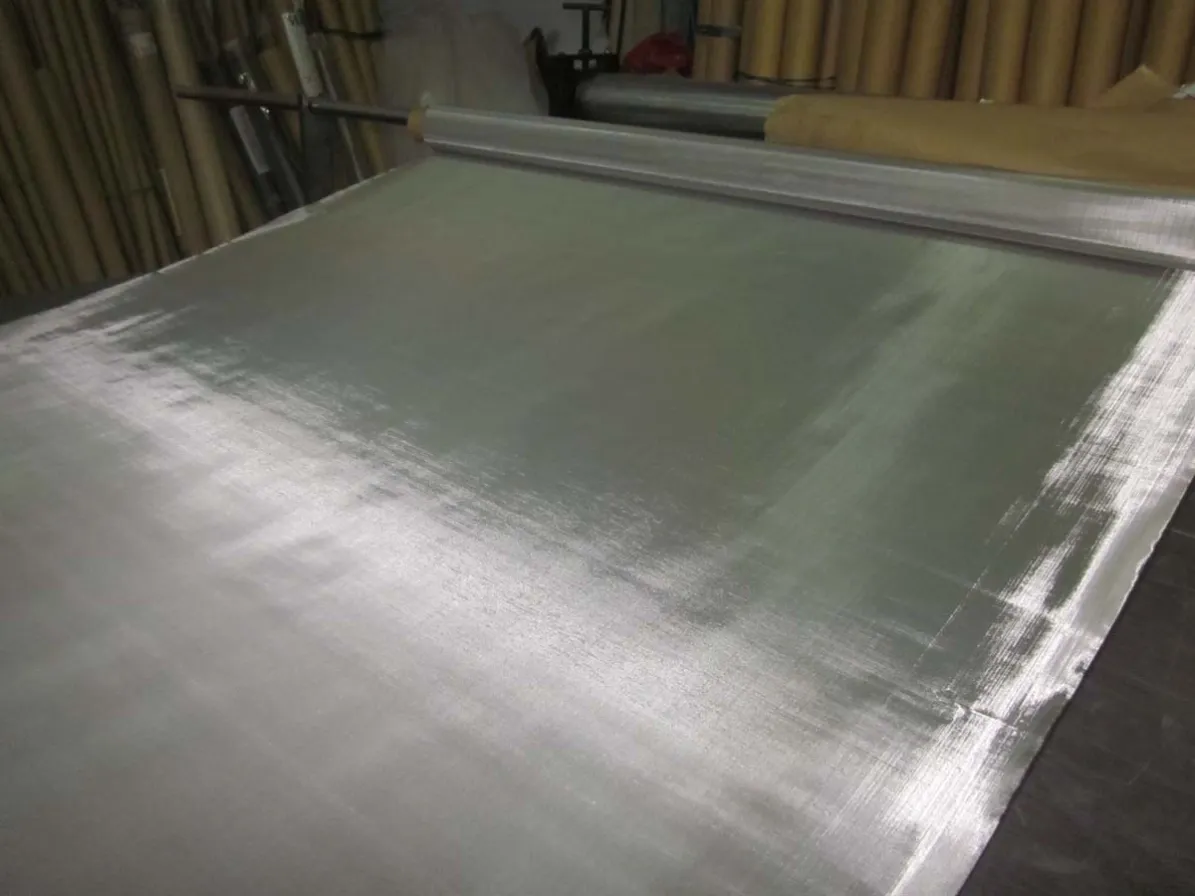
Square Weave Basics
Square woven wire mesh features the same or comparable number of warp and weft wires per unit length, creating uniform square openings with straight-through flow paths.
It is a standard choice for sieving, screening, particle sizing, and coarse-to-medium filtration where consistent openings and efficient material passage are essential.
Key Advantages
- Uniform square openings for accurate particle sizing
- Straight-through flow paths for efficient screening and filtration
- Easy to clean and inspect
- Available in a wide range of mesh counts and wire diameters
Dutch Weave Basics
Dutch weave uses different wire diameters and mesh counts for the warp and weft wires. The resulting openings are typically elongated, tapered, or wedge-shaped rather than square.
The finer weft wires create a dense filtering surface that retains particles effectively. In some applications, retained particles form a filter cake, which can improve filtration efficiency and particle retention.
Key Advantages
- Fine filtration and high particle retention
- High mechanical strength and pressure resistance
- Suitable for demanding industrial filtration
- Available in Plain Dutch Weave and Twilled Dutch Weave
When to Choose Square Weave
Choose square weave when you need uniform openings, reliable screening, and easy material passage.
Typical applications include:
- Test sieving and laboratory screening
- Food processing and flour sifting
- Chemical and pharmaceutical screening
- Particle grading and classification
- Architectural and decorative mesh
Square weave is ideal for applications where the opening size is a key requirement and the material needs to pass through the mesh efficiently.
When to Choose Dutch Weave
Choose Plain Dutch Weave or Twilled Dutch Weave when fine particle retention, high filtration precision, and mechanical strength are more important than a uniform square opening.
Typical applications include:
- Polymer melt filtration
- Plastic extrusion and screen changers
- Aerospace filtration
- Chemical processing
- Hydraulic and industrial filtration
- High-pressure liquid and gas filtration